I still remember the phone call from a distributor in Brazil last month. He sold outdoor equipment for ten years. His stores had good locations. His sales team knew how to move products. But he sounded frustrated.
"I see everyone selling e-scooters now," he said. "Same models everywhere. Prices dropping every week. Why should I enter this market?"
I understood his concern. He was looking at the wrong part of the market.
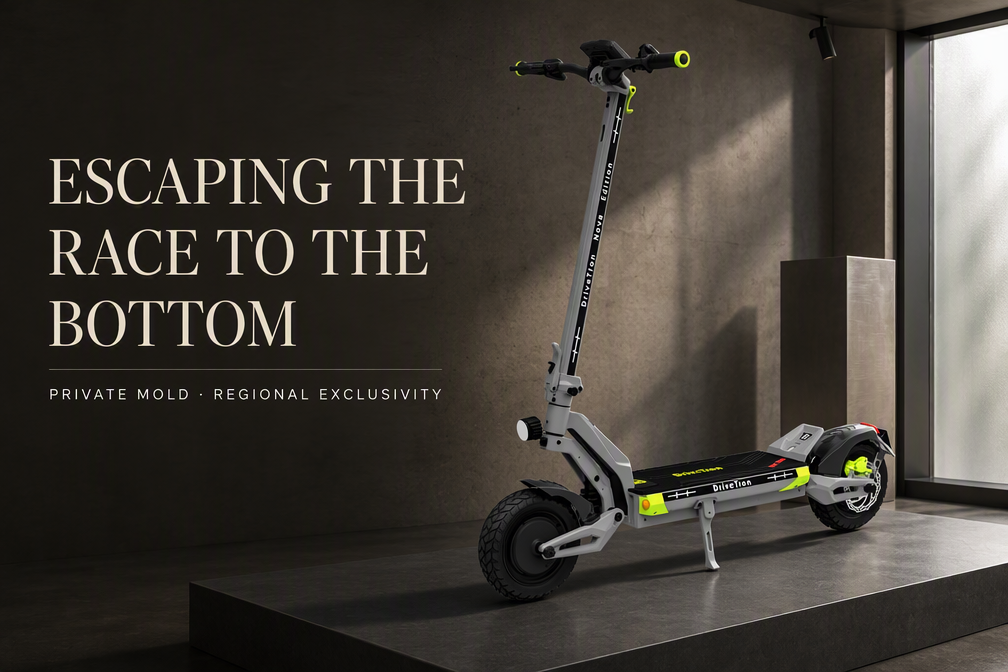
The e-scooter industry splits into two completely different worlds. One world is a price war nightmare where profits disappear in months. The other world is where distributors build sustainable businesses with protected margins. The difference is not product quality. The difference is whether you use private mold products with regional exclusivity.
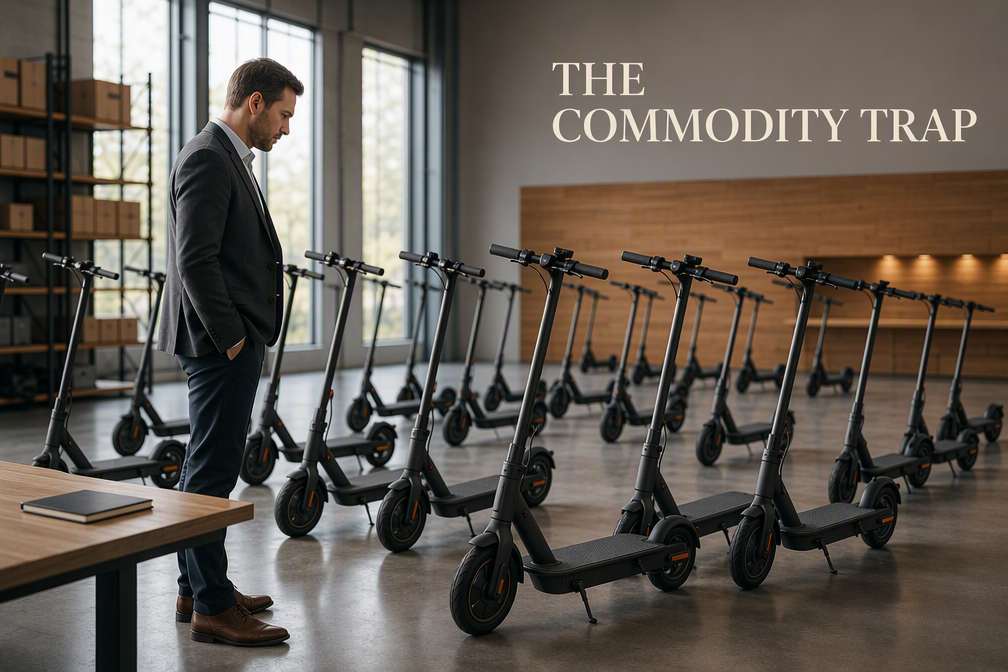
Most distributors see the commuter scooter segment first. This is the visible market. Basic models with public molds. Multiple suppliers offering identical products. I watch new distributors enter this segment every month. Within six months, their margins collapse. Why? Because when your competitor can source the exact same product from five different factories, price becomes the only difference.
What makes the enthusiast market different?
The high-performance enthusiast market operates under different rules. I work with distributors who maintain 20-30% higher margins than commuter segment sellers. They do not have better negotiation skills. They do not buy larger volumes. They simply chose a market structure that protects their investment.
Here is what creates this protection:
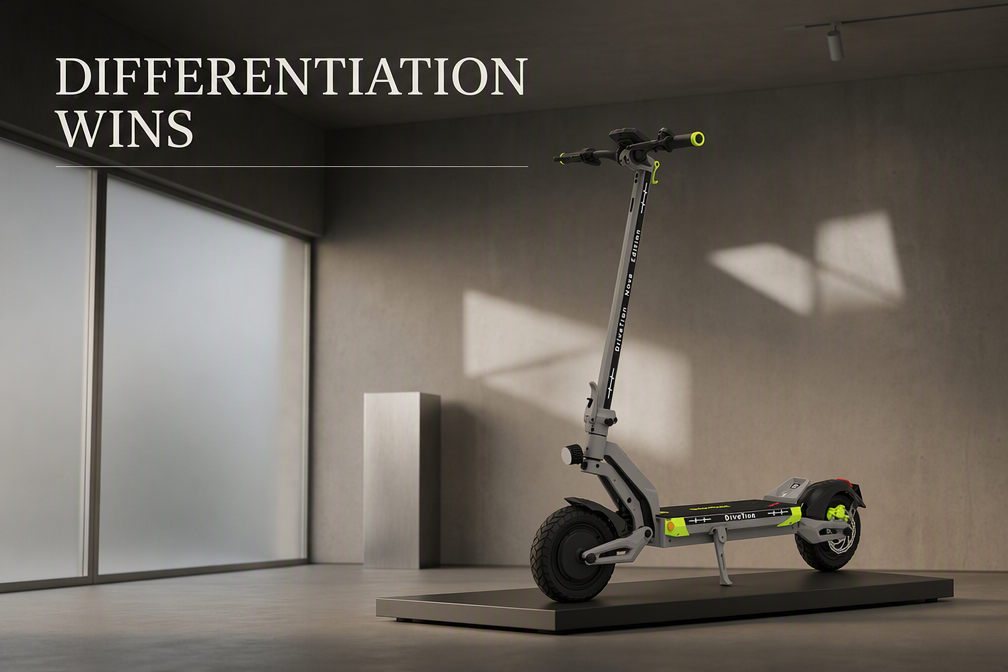
Private mold products eliminate direct price comparison. When your product looks different from every competitor, customers cannot shop by price alone. They evaluate your complete package: product features, your brand story, your after-sales support.
Regional exclusivity prevents copycat competition. With formal exclusivity agreements, you know no one in your territory can sell the identical product. Your marketing investment cannot be stolen by price undercutters.
I recently spoke with a distributor who switched from public mold to private mold products. His first concern was inventory risk. "What if I cannot sell these units?" he asked.
I showed him the math. With public mold products, he competed against fifteen other sellers in his city. With private mold products and exclusivity, he had zero direct competitors for that specific model. His unsold inventory risk actually decreased because he controlled the supply in his market.
Why cross-industry distributors have an advantage
Distributors from electronics, automotive accessories, or outdoor gear often hesitate to enter e-scooters. They think their lack of technical knowledge is a weakness. I see it differently.
These distributors already understand the core business principle: you need product differentiation to maintain margins. They learned this lesson in their original industries. They know what happens when products become commodities.
A distributor from the electronics industry told me: "In my business, when everyone sells the same smartphone accessories, we die. We survive by finding unique products." He understood the enthusiast e-scooter market immediately. Same business logic, different product.
The technical concerns these distributors raise—battery compliance, after-sales capability, logistics complexity—are real. But they are solvable problems. The structural problem of entering a commoditized market is not solvable. No supplier support can save your margins when five competitors sell identical products for less.
The real decision framework
When distributors evaluate entering the e-scooter market, I see them focus on wrong questions:
- "Can I learn the technical details?" (Answer: Yes, with good supplier support)
- "Do I have after-sales capability?" (Answer: Yes, with proper training and BOM documentation)
- "Can I handle battery logistics?" (Answer: Yes, with compliant certifications)
The right question is: "Am I entering a market segment where my business model can work?"
If you choose the commuter segment with public mold products, no amount of hard work changes the fundamental economics. You will fight price wars. Competitors will appear constantly. Marketing becomes expensive because customers shop purely on price.
If you choose the enthusiast segment with private mold products and exclusivity, you operate in a different game. You build brand value. You protect your margins. Your marketing investment creates lasting advantages.
What this looks like in practice
I work with a distributor who started with 30 units of a private mold high-performance model. He worried this was too small. But with regional exclusivity, those 30 units created scarcity. Customers could not find alternatives. He sold out in six weeks at full retail price.
Compare this to another distributor who imported 200 units of a popular public mold commuter scooter. Within two months, three competitors appeared with the same product. Price dropped 15%. He still has inventory after four months.
The volume difference looks dramatic. But the first distributor made more total profit with fewer units and fewer headaches.
The mindset shift required
Many distributors think: "I will start with cheap, popular models to learn the market. Then I will move to premium products."
This logic works in some industries. It fails in e-scooters. Why? Because the two market segments operate so differently that experience in one does not prepare you for the other.
Learning to compete on price teaches you price competition skills. Learning to build brand value teaches you differentiation skills. These are opposite capabilities.
The distributors who succeed long-term choose their segment carefully from day one. They build systems—supplier relationships, customer service, brand positioning—that match their chosen segment.
Common objections I hear
"Private mold requires larger minimum orders."
Yes, but exclusivity means you do not compete with unlimited sellers. Your inventory turns faster because customers cannot find alternatives. The real risk is ordering public mold products that sit unsold while competitors undercut your price.
"I do not know if the enthusiast market exists in my region."
Look at motorcycle shops, outdoor gear stores, electronics enthusiasts. These customers exist everywhere. They buy premium products. They value performance over lowest price. The question is whether you can reach them—which requires different marketing than commuter segment customers.
"What if the product has problems?"
Good manufacturers provide complete BOM documentation, video training, and technical support. With private mold products, your supplier is invested in your success because you are their exclusive partner in your region. Public mold manufacturers have hundreds of customers—you are replaceable.
Making the choice
I cannot tell every distributor to enter the enthusiast segment. Some have business models built for volume. Some have customer bases that want lowest prices. That's fine.
But if you have existing relationships with customers who value quality, if you have experience building brand value, if you want sustainable margins—then the enthusiast segment with private mold products makes business sense.
The worst choice is entering the commuter segment thinking you can somehow avoid the price competition. You cannot. The market structure determines this outcome. No supplier relationship or hard work changes it.
Conclusion
The e-scooter market opportunity is real. But success depends on choosing the right segment before you choose your first product. Private mold products with regional exclusivity create the market structure that protects distributor margins. This is not about product quality alone. This is about business model fit.
Smart distributors recognize that the enthusiast segment offers fundamentally better economics. They use their existing channel strengths—customer relationships, service capability, brand-building experience—in a market structure that rewards these capabilities.
The race to the bottom exists in the commuter segment. You can watch from outside that race. Or you can build a sustainable business in the enthusiast segment where your competitive advantages actually matter.
If you want to explore how private mold products and regional exclusivity can work for your distribution business, I'm here to answer questions. The technical concerns you have are solvable. The strategic choice of market segment determines everything else.
Leave a Reply