I've watched too many importers burn five-figure ad budgets only to see their sales cannibalized by identical products at 30% lower prices. They call me frustrated: "We invested in Facebook campaigns, built a landing page, trained our sales team—and now our competitors are selling the exact same scooter for $200 less." The real tragedy? They thought slapping a logo on a public-mold product counted as brand protection.
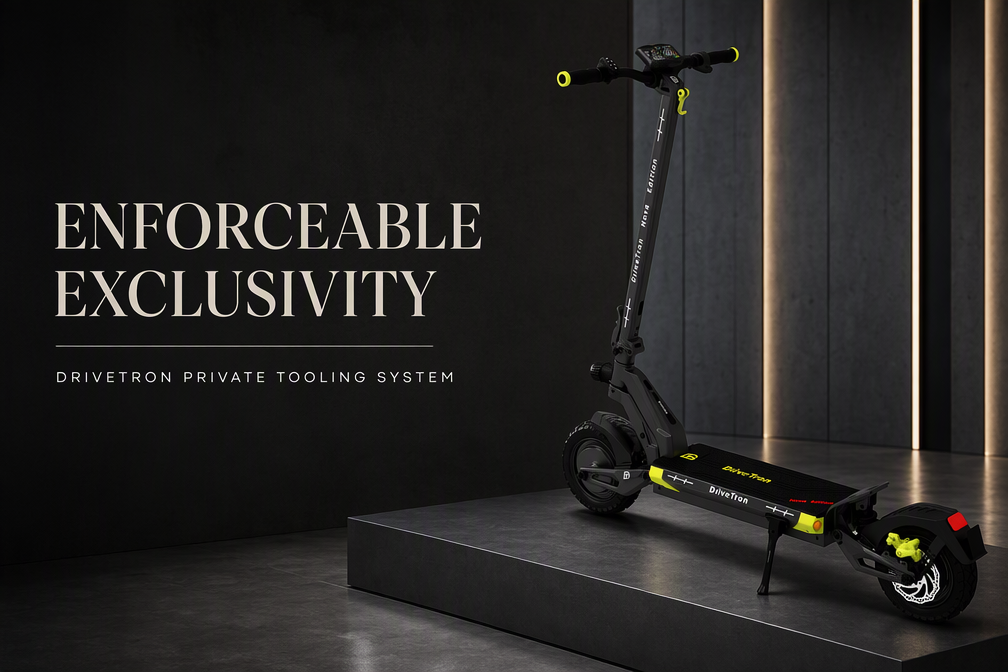
Most suppliers offer rebadging theater. DriveTron delivers enforceable exclusivity backed by private tooling, legal territory locks, plug-and-play marketing assets, and standardized service infrastructure. This isn't brand consulting—it's a contractual system that turns your ad spend into defensible margin instead of free customer acquisition for copycat competitors.
This matters because the real cost isn't the first container—it's what happens after you've spent three months building local awareness. When a competitor sources the same public-mold frame from another factory and undercuts you, your marketing investment evaporates. The question isn't whether DriveTron's scooters perform—it's whether our supply chain architecture and service infrastructure protect the margin you need to keep investing in growth.
Private Tooling & Territory Lock: Eliminating Copycat Undercutting with Enforceable Exclusivity
Every quarter, I review partnership applications from importers who "tried another supplier" and got burned. The pattern repeats: they negotiated exclusive rights to a model, invested in localized packaging and dealer training, then discovered three competitors selling identical units because the factory's definition of "exclusive" meant "exclusive until someone else orders 50 units."
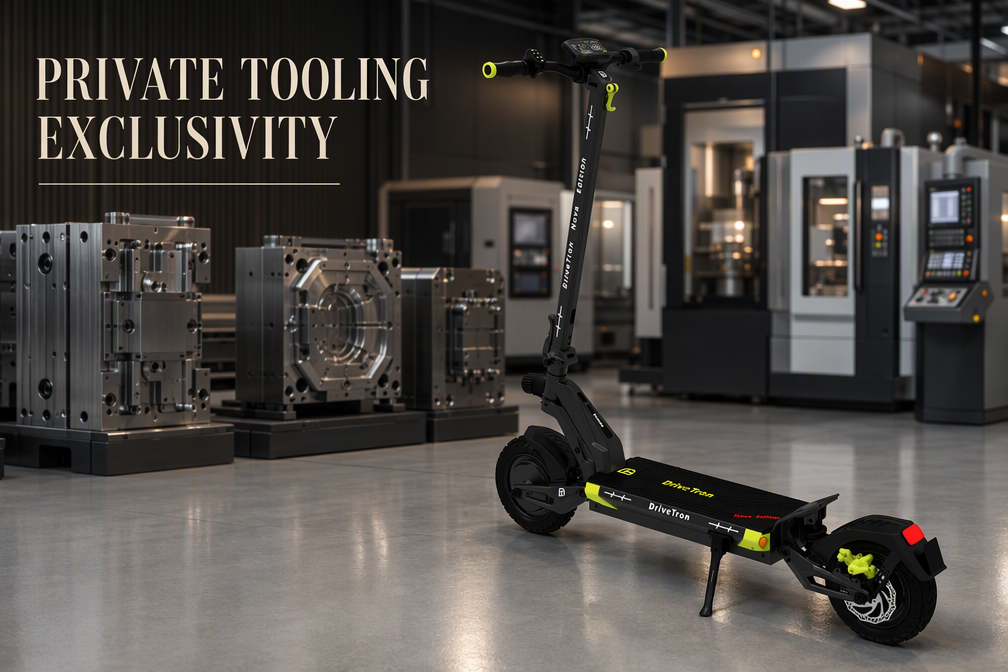
DriveTron's private tooling means we own 100% of the molds for frames, fairings, and structural components. No other factory can produce these designs because the injection molds physically exist only in our facility. This isn't a gentleman's agreement—it's metallurgical reality.
The Three-Layer Exclusivity System
-
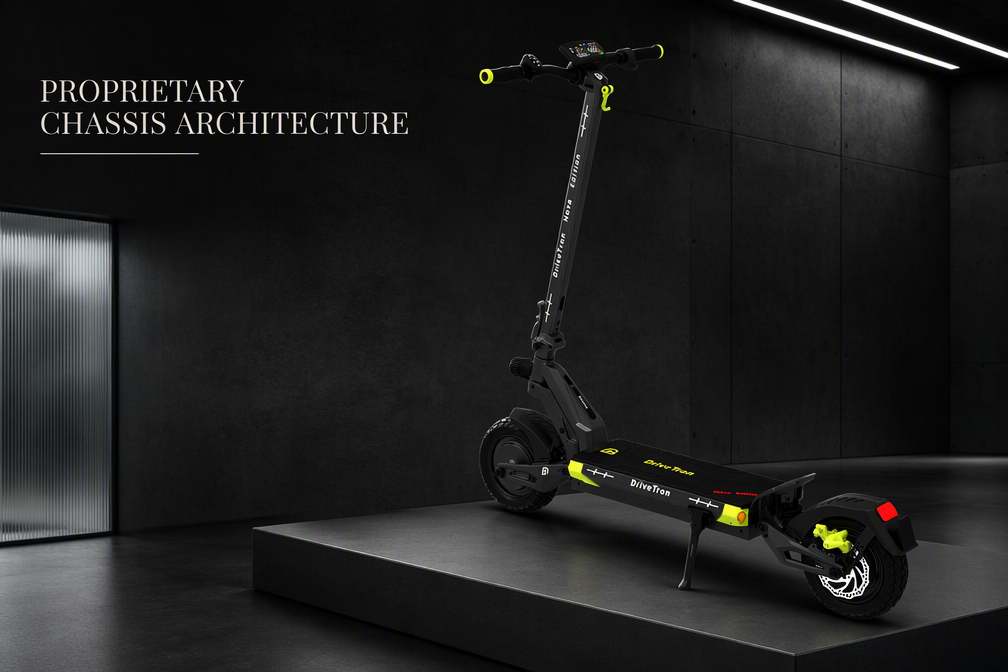
Design Patents Block Visual Copying: We file appearance patents in your target markets (EU, US, Brazil, Australia). When a competitor tries to replicate the chassis profile or suspension mounting geometry, you have legal grounds to block customs clearance or demand takedown from online marketplaces.
-
Supply Chain Monopoly Prevents Sourcing Clones: Because we control the tooling, competitors can't simply contact our suppliers to make "similar" versions. They'd need to reverse-engineer the frame and invest $50,000–80,000 in new molds—a barrier too high for most regional importers.
-
Territory Agreements with Enforcement Teeth: Our contracts specify protected regions (typically country-level or state-level in large markets like the US). We maintain an internal database tracking committed territories. When a new prospect requests the same model in your region, we decline the order and document the conflict. Violation penalties include order cancellation and deposit forfeiture.
I've personally turned away orders from well-funded distributors because they wanted access to markets where we'd already committed exclusivity. One prospect in Germany offered to double the minimum order quantity—we refused because our Austrian partner had locked that design for DACH territories three months prior. That's not altruism; it's the only way territorial protection stays credible.
The business impact is straightforward: when your retail partners know competitors can't undercut them with identical hardware, they stock deeper inventory and promote more aggressively. I've seen this transform cautious "test orders" into committed forecasts because dealers finally believe the margin will hold.
The Plug-and-Play Asset Kit: Turning Frame Engineering and BOM Specs into Retail Confidence
Most B2B suppliers ship product and call it support. Your sales team gets stuck explaining why your scooter costs $899 when a visually similar model lists at $599. Without technical differentiation language, they default to vague claims about "quality" that sophisticated buyers dismiss.
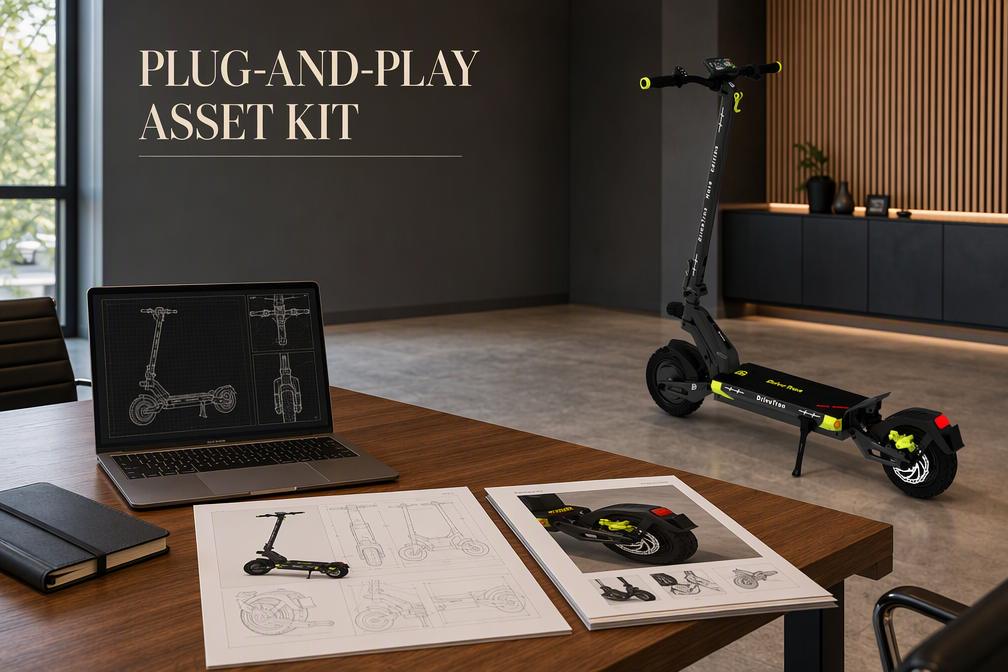
DriveTron's marketing asset package translates our engineering decisions into sales ammunition. This isn't generic content—it's product-specific proof built from our actual production process.
What's Actually Included
Exploded CAD Renderings: Full-resolution images showing battery pack mounting, controller heat dissipation paths, and suspension geometry. Your team can overlay these on sales sheets to demonstrate why our chassis design handles thermal management differently than tubular-frame competitors.
Video Walkthrough of Frame Welding & Heat Treatment: We recorded our TIG welding process and post-weld stress relief cycles. This 3-minute clip answers the #1 technical objection from premium buyers: "How do I know this won't crack at the neck joint after six months?"
Comparative Spec Tables Pre-Loaded with Competitor Models: We track the top five public-mold alternatives in each segment. Our tables highlight where DriveTron specs diverge—things like 15mm motor shaft diameter vs. industry-standard 12mm, or dual-spring front suspension vs. single-spring shortcuts. This removes guesswork from positioning conversations.
Translation-Ready Copy in Eight Languages: We've pre-translated core product descriptions, safety certifications, and technical FAQs into Spanish, Portuguese, German, French, Dutch, Polish, Arabic, and Hebrew. Your team doesn't waste weeks wrestling with technical terminology—they customize layouts and launch.
UL/EN Compliance Summary Sheets: One-page explainers of what UL 2272 and EN 17128:2020 actually test, formatted for dealer training or consumer FAQ sections. Most end customers don't know these standards exist; this copy educates them in non-technical language while establishing regulatory legitimacy.
One Austrian brand owner told me: "Your asset kit let me brief my sales team in two hours instead of two weeks. They finally understood why we could charge €899 when Alibaba knockoffs list at €599. Conversion rate jumped 40% because we stopped sounding defensive."
The critical insight: buyers don't object to premium pricing—they object to unsupported premium pricing. When your team can pull up a thermal camera video showing our controller running 15°C cooler than competitors under identical load, price resistance evaporates. We're not teaching you to sell; we're giving you the evidence to let the product sell itself.
Full-Lifecycle Service Enablement: Standardized Troubleshooting and Spares to Protect Long-Term Margin
The moment most brands lose control of margin is 90 days post-sale, when warranty claims start arriving. If your local service partners can't diagnose faults quickly, you face two ugly choices: eat expensive return shipping to China for trivial fixes, or replace entire units to preserve customer satisfaction. Either path destroys the profit from the original sale.
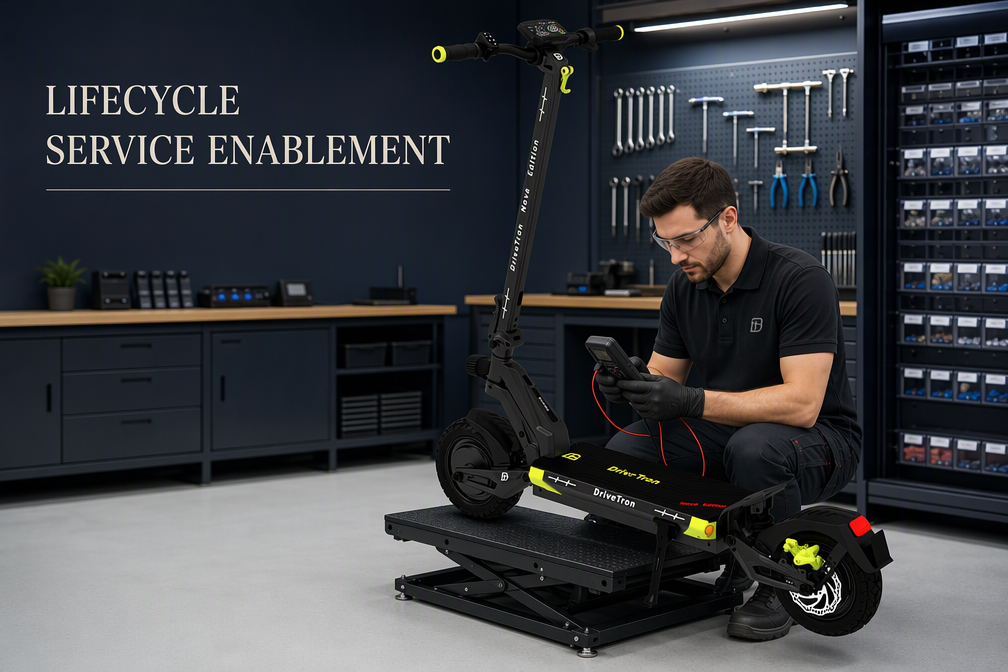
DriveTron's service enablement infrastructure treats post-sale support as a margin protection system, not an afterthought.
The Three-Tier Support Framework
Tier 1—Component-Level BOM with Supplier Cross-References: We provide full bills of materials down to individual fasteners, with manufacturer part numbers and generic equivalents. When a customer needs a replacement brake caliper, your service team orders locally available Tektro components instead of waiting three weeks for container shipping from China. This cuts warranty labor costs by 60% because you're not air-freighting $8 parts.
Tier 2—Video Diagnostic Library: We filmed common failure modes: throttle signal dropout, battery BMS lock-out, motor phase wire damage. Each video includes multimeter readings, troubleshooting decision trees, and parts replacement sequences. Your techs watch a 5-minute clip instead of spending 45 minutes on trial-and-error diagnosis. One Brazilian distributor calculated this saved 3.2 labor hours per RMA case.
Tier 3—Direct Engineer Access for Complex Cases: For the 5% of issues that don't match standard patterns, we provide WeChat/WhatsApp direct line to our production engineers. They review diagnostic photos, interpret error codes, and authorize warranty exceptions without forcing you through layers of customer service bureaucracy. Average resolution time: under 4 hours.
Why This Protects Margin
Every unresolved warranty case costs you in three ways: the immediate parts/labor expense, the customer goodwill damage that kills referrals, and the loss of sales team confidence that makes them stop pushing your product. DriveTron's service infrastructure cuts RMA cycle time from 18 days (industry average for overseas suppliers) to under 5 days for component-level repairs.
The business math is simple: if warranty costs eat 8% of revenue instead of 15%, that extra 7 points goes straight to margin. For a $200,000 annual purchase volume, that's $14,000 in recovered profit. Enough to fund an additional paid search campaign or hire a dedicated product specialist.
Frequently Asked Questions
Does private tooling mean I can never switch suppliers?
No—you own the design through our licensing agreement. If you choose to move production after minimum contract term, we'll provide technical drawings for a transition fee. But most partners don't switch because replicating our frame welding specs and thermal engineering elsewhere requires re-validating UL/EN certifications, which costs $40,000+ and six months. The real lock-in isn't legal—it's economic efficiency.
How do you prevent me from buying, then selling into someone else's protected territory?
Our distributorship agreements include destination control clauses. If we detect cross-border gray market activity (usually flagged through warranty serial number lookups or marketplace monitoring), we terminate supply and activate financial penalties. We've enforced this twice in three years—once in Western Europe, once in South America. Word spreads fast.
Can I get exclusivity for public-mold models to test the market?
No. Public molds have no supply-side control. We've seen too many partners invest in marketing only to face instant competition. We recommend either committing to private tooling upfront (typical MOQ: 200 units over 12 months) or accepting public models as price-competitive volume plays without territorial protection.
What happens if my market doesn't absorb forecasted volume?
Our agreements include graduated minimums: Year 1 typically requires 60% of committed volume, Year 2 ramps to 80%, Year 3 reaches 100%. If you miss targets, exclusivity converts to non-exclusive but pricing stays tiered—you don't lose access, but we may open the territory to additional partners after review. We've never invoked this because proper market sizing during onboarding prevents over-commitment.
Do you white-label your brand off the product?
Partially. We remove "DriveTron" from visible surfaces and allow your logo on the deck, display screen, and packaging. But battery packs and controllers retain manufacturer markings for safety compliance traceability—a UL 2272 requirement. We've never had a retail customer complain; they don't open sealed electrical enclosures.
Conclusion
Brand protection in cross-border hardware commerce isn't about inspirational messaging—it's about whether your supplier's operational infrastructure makes copycat competition structurally impossible. DriveTron's private tooling eliminates sourcing alternatives, territory agreements create enforceable boundaries, plug-and-play marketing assets remove positioning ambiguity, and service enablement prevents warranty costs from devouring margin.
The test isn't whether we claim to protect your investment—it's whether we've built systems that make violation costly and cooperation profitable. Over the past four years, we've turned down $800,000+ in orders from prospects targeting committed territories. That's not customer service; it's the only way contractual exclusivity stays credible enough to justify your ad spend.
If you're ready to stop subsidizing your competitors' customer acquisition, contact us at contact@drivetrontech.com or +86 188 5748 2956. Bring your market projections and competitive landscape—we'll show you exactly which models qualify for territorial protection and what the asset package includes. Most importers who've lost margin to copycat competition recognize the value within the first call.
Leave a Reply